
 Indonesia
 English




.jpg)
Amid the rapid pace of digital transformation, the future of our education system is being tested by new challenges that transcend the boundaries of traditional classrooms.
The digital literacy gap, limited access to coding education, and a lack of proficiency in robotics technology remain structural barriers for the majority of our nation’s children across various regions.
This is where the vital role of the organizations you lead finds its common ground. Today, Corporate Social Responsibility (CSR) programs can no longer be viewed merely as instruments of philanthropy or one-time donations. We are witnessing a paradigm shift: from being a funder to becoming a strategic partner that helps shape the educational ecosystem of the future.
As a roadmap, here is a strategic framework for you to build cross-sector collaborations that not only have a broad impact but are also deeply rooted for the long term.
Forging Synergy: The Concept of Multi-Stakeholder Collaboration
Creating tangible social impact requires us to look beyond the boundaries of our organizations. The cornerstone of this movement is collaborative governance.
Simply put, the success of a public program, including school digitization, depends heavily on the willingness of various stakeholders to complement one another and move in unison.
Digital transformation and improving well-being are complex goals. This grand agenda will never be completed if shouldered by a single party alone. It requires close cooperation among regulators (the government), the private sector, educational institutions, and the community itself.
Mapping Strategic Roles in the CSR Ecosystem
Designing a CSR program with sustainable impact is essentially like conducting a symphony. Its success is never determined by a single instrument alone, but rather by the harmonious synergy among parties that complement and support one another.
When we talk about accelerating digital education, you, as policymakers, surely understand that success on the ground is the result of structured collaboration.
To create real, inclusive, and long-lasting change, we need to understand the following strategic roles:
1. Companies (private sector)
Within this ecosystem, the private sector plays a vital role as the primary driving force. Your companies do not merely serve as providers of funding, technical expertise, or digital infrastructure, but also as trailblazers for innovation.
Your tangible support enables the creation of inclusive digital educational products. By prioritizing the principles of universal design, our partners ensure that the wonders of coding and technology are equitably accessible to all children without exception, including those with special needs (disabilities).
This is where the value of a company’s social investment transforms into a precious legacy for humanity.
2. Schools and educational institutions
Schools are the front lines where all our grand ideas converge and are put to the test (testbed). This is the space where digital curricula, coding classes, and even robotics experiments are integrated into students’ daily learning activities.
However, no matter how advanced the technology is, it will not thrive without the readiness of educators. Therefore, educational institutions bear a significant responsibility to continuously build teachers’ capacity.
The goal is to produce credible educators who are not only skilled at teaching digital literacy but are also capable of instilling an awareness of cybersecurity in students from an early age.
3. NGOs
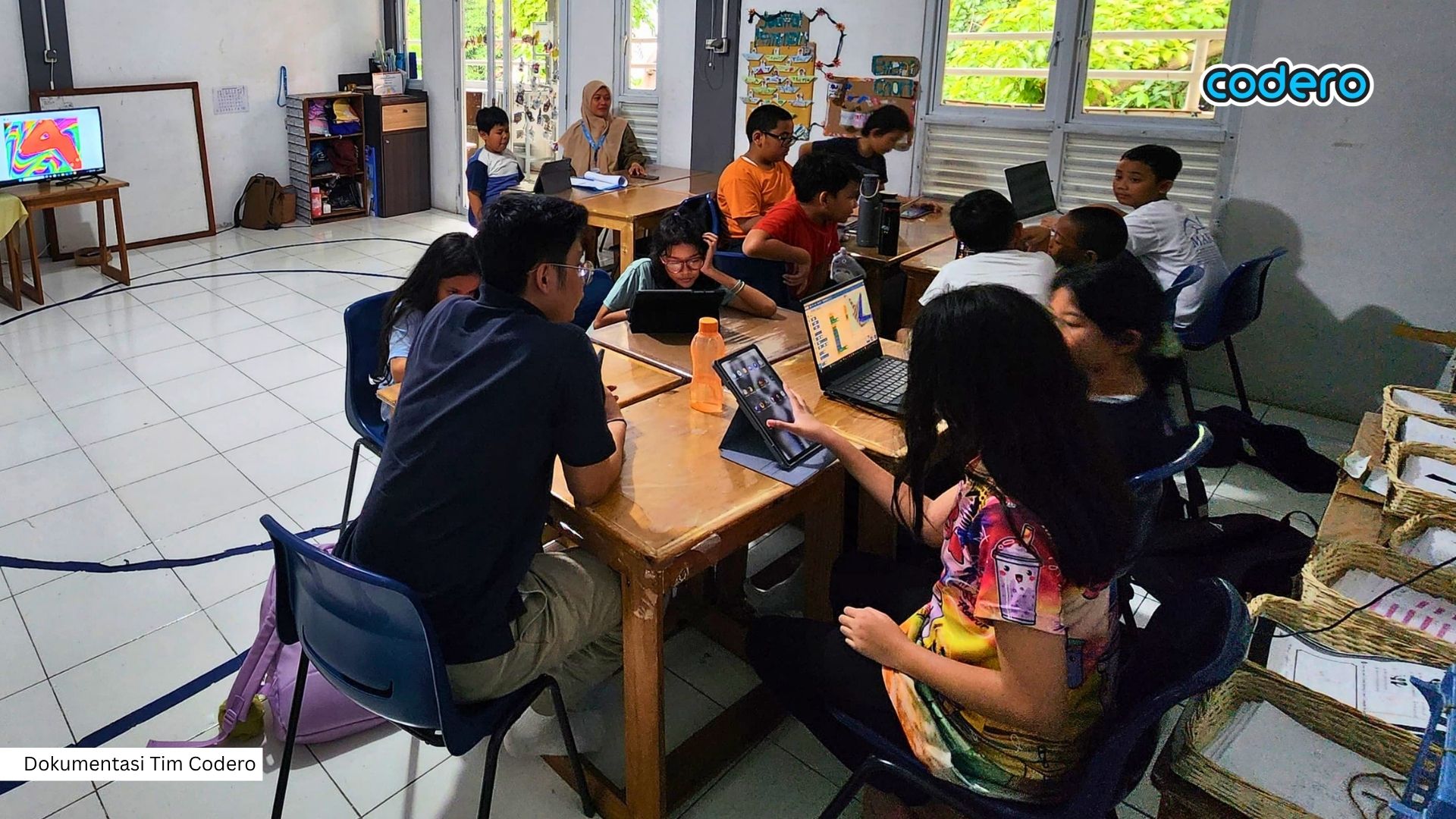
If companies hold the big picture and schools provide the space, then non-governmental organizations (NGOs) are the driving force that moves swiftly on the ground. Their close ties to local communities make every form of program intervention far more targeted and humane.
NGOs play a vital role as a bridge connecting regulations or macro-level policies with the reality of actual needs in the classroom. They are the ones who oversee the implementation of regular teacher training in the field, monitor the progress of the program, and provide intensive mentoring to ensure that every student’s potential is fully realized.
Through this harmonious division of roles, the workload of the CSR program development team will be significantly streamlined, while the resulting social impact on the company’s reputation will be amplified.
Overcoming Challenges, Forging Real Solutions
Along the way, cross-sector collaboration often encounters obstacles in the field. However, with the right approach, these obstacles can be turned into turning points for success:
Coordination challenges and the risk of duplication
Reality on the ground: It is common for one region to be flooded with similar aid programs, while another region receives insufficient attention.
Strategic solution: The key lies in strong communication, transparent planning, and aligning programs with national education policy. When your CSR programs are harmoniously integrated into the existing governance system, efficiency will emerge organically.
Sustainability challenges
Reality on the ground: Many collaborative programs suddenly run out of steam and come to a halt once funding ends or when there is a leadership transition.
Strategic solution: From the outset, programs must be designed with structured post-program support mechanisms to foster a sense of ownership. Through periodic data-driven impact evaluations, long-term effectiveness will be sustained.
The challenge of technical capacity gaps
Reality on the ground: Teachers or field staff often feel unprepared or even intimidated by the technical aspects of managing a new technology ecosystem.
Strategic solution: We must shift from simply donating devices to investing in professional development. The program’s primary focus should not only be on providing hardware but also on enhancing the skills and confidence of the people behind those tools.
A Tactical Guide to Launching a Collaborative Initiative
To lay the foundation for an effective and far-reaching technology education CSR program, here are some proven steps you can take:
1. Assess the situation through a needs assessment
Avoid proceeding based on assumptions. Gain a deep understanding of the school’s unique needs, teacher profiles, and local community conditions so that the interventions you design are truly relevant and address the root causes of the issues.
2. Build trust through open dialogue
Trust is the most valuable asset in cross-sector collaboration, and it takes time to grow. Start with open, face-to-face dialogue to align perspectives and build a shared commitment to public goals.
3. Establish facilitative leadership
Success on the ground requires an adaptive driving force. Appoint a program coordinator who can identify the dynamics of the school’s needs and is adept at mobilizing resources at the right time.
4. Developing a collaborative blueprint
Create a solid joint action plan. Ensure it includes a transparent division of roles, measurable targets (such as indicators of children’s coding proficiency at specific levels), and an accountable monitoring system.
Making a Real Impact with Codero
By bringing together various stakeholders under a shared vision, your company’s CSR program will not only enhance its corporate reputation but also become an institutional legacy that tangibly supports equitable access to quality education for future generations.
Codero serves as a strategic partner to help you address the challenges of digital transformation. By ensuring equitable access to coding and robotics education, we are working together to build a sustainable foundation of STEM literacy for future generations.
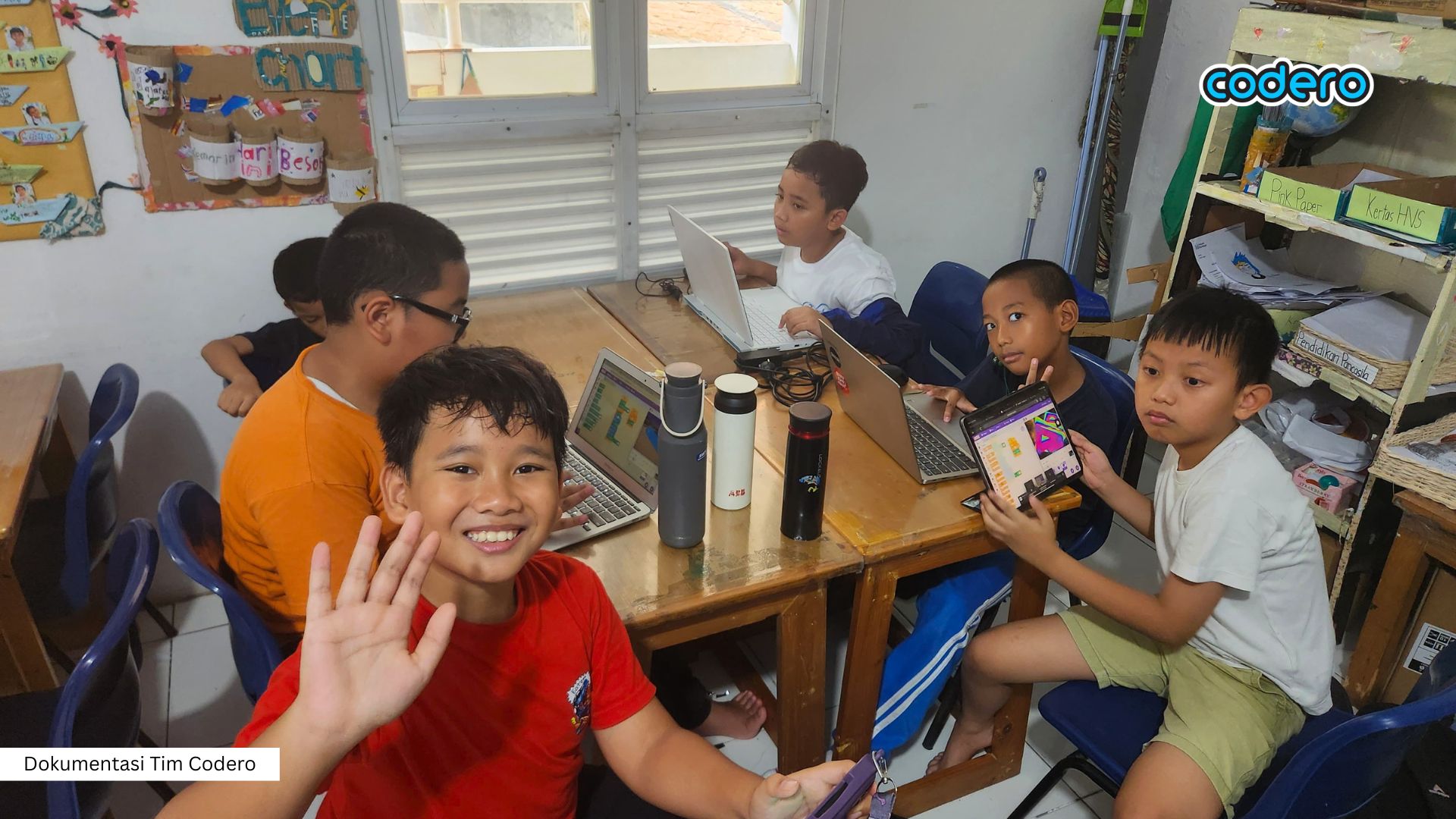
The success of this integrated collaboration model has been demonstrated through the synergy between Codero and PT BRE in Tapin Regency. This ongoing program has successfully improved digital literacy among elementary school students and teachers, while also serving as tangible proof of how the private sector can drive the equitable distribution of technology in rural areas.
With Codero, your company can implement CSR programs that are highly efficient in terms of budget and resources, yet still generate transformative social impact for Indonesia’s future.
Let’s collaborate to build a competitive and inclusive digitally savvy society. Contact our team of experts to start designing the best program for your company.
Discuss your CSR collaboration plans by contacting:
📞 +62 851-6116-0039 (Ms. Acha)
References:
Assessing the Impact of Government and NGO Literacy Programs on Elementary Schools
NGO Collaboration in Education
School Partnership Addressing Child Well-Being and Digital Technology
.jpg)

.jpg)
