
 Indonesia
 English




.jpg)
Hello, amazing moms and dads, how are you today? We hope you’re always healthy and full of energy as you support the growth and development of your beloved little ones.
In this rapidly evolving digital age, we often hear technological terms, one of which is the humanoid robot. Perhaps you and your little one have seen them in science fiction movies, where one of the characters is a robot that can walk and talk like a human.
But did you know that this technology actually already exists all around us? In fact, the journey it took to reach this point is surprisingly long and fascinating, you know!
Let’s take a moment to explore and get to know this technology better—one that will soon become an integral part of our children’s future!
What Exactly Is a Humanoid Robot?
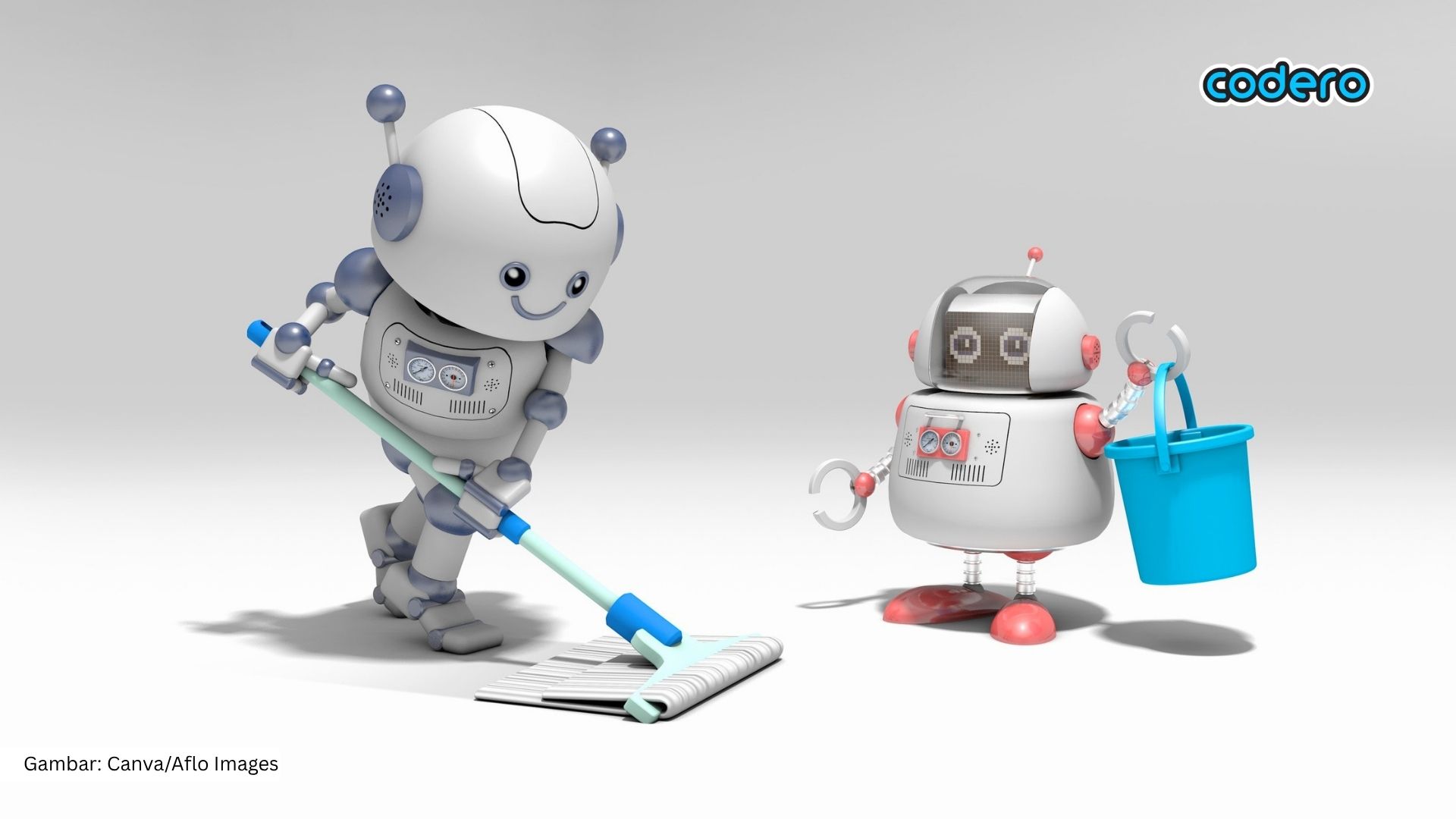
Maybe at some point your child has asked, “Why are there robots that look just like us?" Simply put, a humanoid robot is an intelligent machine intentionally designed to resemble the human body, both in terms of size and how it functions.
These unique robots are designed with a head, torso, two arms, and two legs.
As a result, when they move, walk, or wave their hands, their movements look very similar to our everyday movements. It’s truly amazing, isn’t it?
Why does it have to look like a human?
After seeing for yourself the shape of robots that assist us in our daily lives, the question surely crosses your mind: “Why not just make them shaped like cars or boxes to make things easier?”
Well, that’s where the unique purpose lies! The world we live in today, from doorknobs at home, school staircases, hospital corridors, to supermarket aisles, is all built and specifically designed by humans for the convenience of human mobility.
Therefore, so that these robots can become great assistants and help with our work without needing to alter existing building structures or layouts, they must be made to resemble us.
With a human-like body design, they can easily walk through house doors, climb stairs, or move items inside a warehouse with ease.
Even more impressive, today’s humanoid robots are equipped with “smart brains” that allow them to continuously learn automatically. They can now not only see and move objects carefully but have also begun to communicate and greet us in simple ways!
A Look at WABOT-1: The World’s “Great-Grandfather” of Smart Robots
When we watch movies with our children about advanced robots that can run and jump with grace, we feel a sense of wonder at the possibilities of future technological advancements. But where did all these ideas about robotic adventures begin?
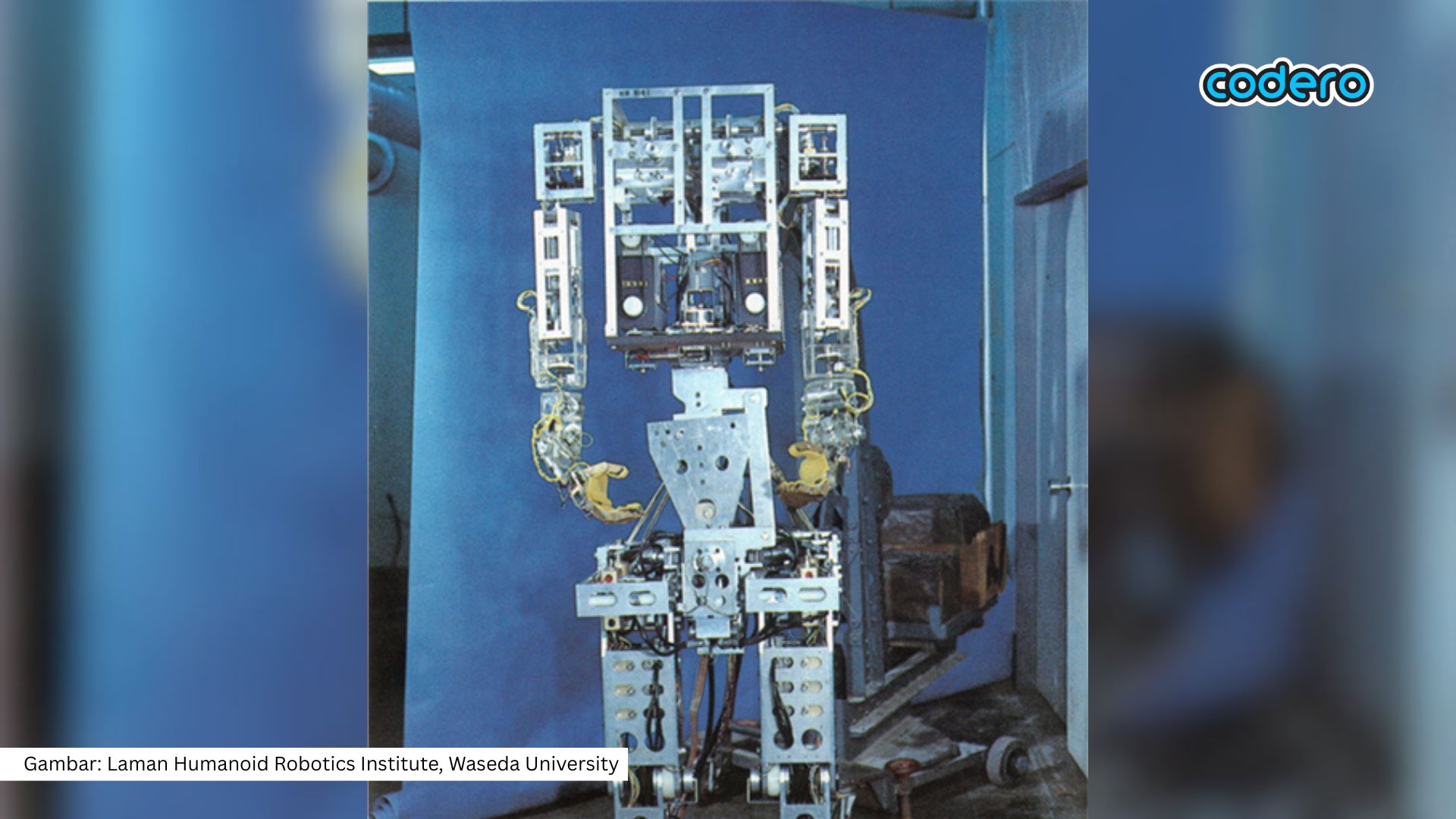
This extraordinary story began with a major breakthrough in the Land of the Rising Sun, Japan. The world’s first life-sized, human-like (humanoid) robot was born under the name WABOT-1 (short for “Waseda Robot”).
This robot is a magnificent masterpiece created by the skilled hands of scientists at Waseda University in Japan. The arrival of WABOT-1 marks a very important milestone in history because, for the first time in the world, a machine possesses a wide range of remarkable human abilities all within a single body.
Created in 1973? Wow, How Is That Possible?
You might be surprised to learn that this smart robot wasn’t built in the modern era. WABOT-1 was actually created in 1973!
Imagine, in an era when computers were the size of wardrobes and smartphones didn’t exist yet, these legendary scientists had already succeeded in designing a robot that could “see” with its sensory eyes, walk on its metal legs, and even engage in simple conversation. Amazing, isn’t it?
Let’s take a look together at the exciting process of how scientists built this first humanoid robot year by year:
1. 1970 (The dream begins to take shape)
This journey began when the late Professor Ichiro Kato and his team at Waseda University in Japan conceived the grand idea of creating an “iron companion” for humans.
2. Studying the secrets of body movement (Biomechanics)
Before assembling the robot, the scientists first studied how human muscles and bones work at the Kato Laboratory. The goal was for the robot to eventually mimic our body movements naturally.
3. Bringing together technological marvels
Instead of creating a robot capable of performing only a single task, they combined all the most advanced technologies of the time into a single form: WABOT-1.
4. Sharing the work of building capabilities
The scientists cheerfully divided up the tasks. Some focused on creating robot legs that could walk steadily, while a brilliant scientist named Dr. Hiromichi Fujisawa specialized in developing a system that would allow the robot to speak.
5. 1973 (Project completion)
After three years of perseverance and exciting experiments, WABOT-1 finally officially debuted to the world as the first robot capable of seeing, walking, and communicating simply with humans.
The success of WABOT-1 in 1973 laid the foundation and served as inspiration for creating the advanced robots we see today.
Researchers of the past envisioned a beautiful future where robots could live alongside us in our homes to help lighten the load of daily chores.
Sparking a Passion for Technology in Children from an Early Age
Rereading the story of WABOT-1’s creation offers us an interesting new perspective. Introducing children to the history of technology from an early age is a great first step toward broadening their horizons.
The curiosity they feel when watching robots move today can spark lively discussions in the living room. Who knows, starting with the sparkle of wonder in their eyes today, perhaps one day your little ones will become the next great inventors!
We hope this short article is helpful for parents. Let’s continue to support our children so they can become a tech-savvy generation, ready to face the challenges of the future!
References:
History of Humanoid Robot in Waseda University
Humanoid Robots: Crossing the Chasm from Concept to Commercial Reality
Japan's $100 Billion Opportunity in General-Purpose Robotics
.jpg)
.jpg)
.jpg)
.jpg)
