
 Indonesia
 English



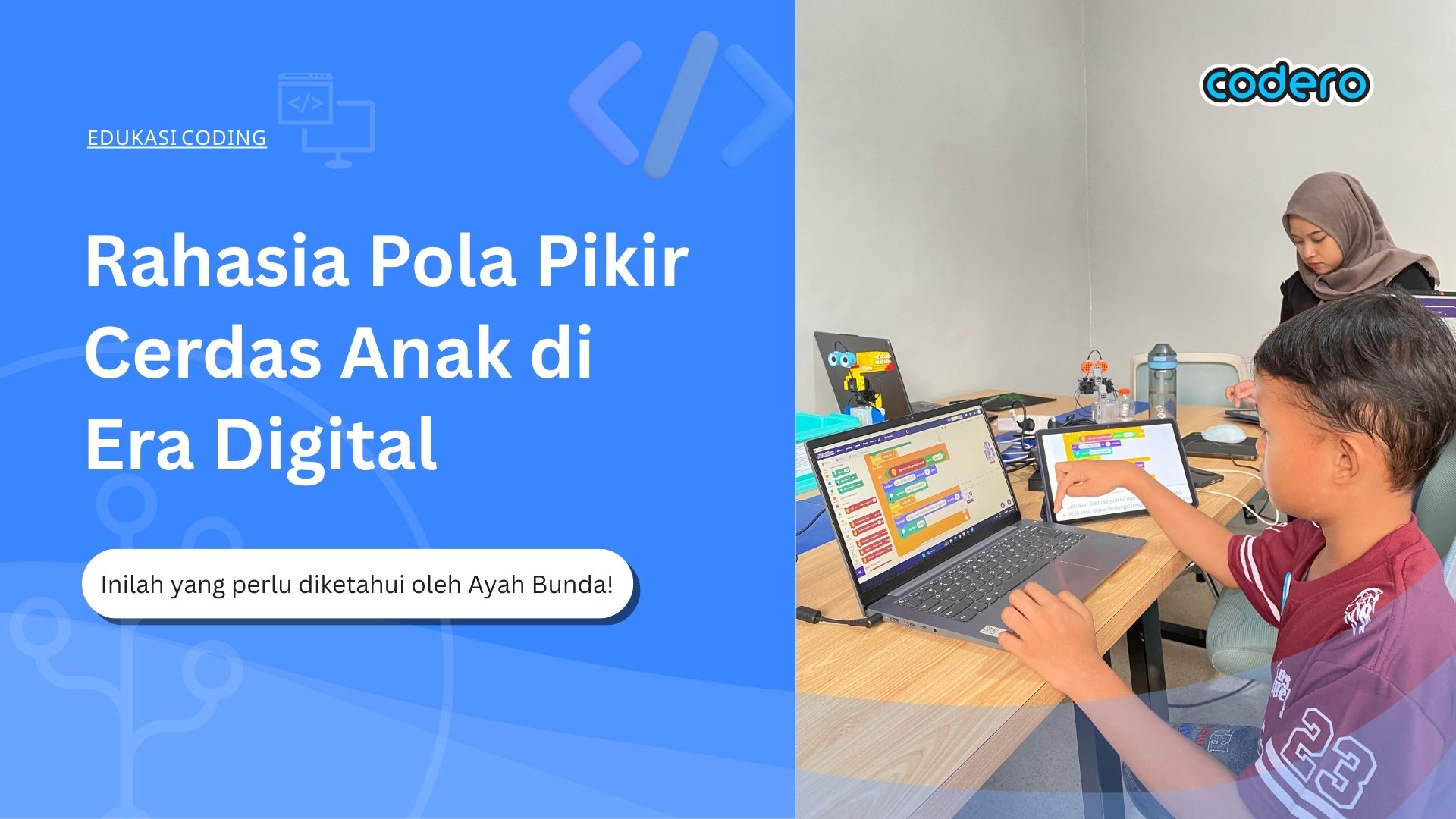
We are often amazed to see how nimble our little ones' fingers are as they dance across their device screens. It seems that they are already “familiar” with technology even before they can tie their own shoelaces. However, there is one little secret that we need to realize together: being proficient in technology is only the surface. There is one skill that is far more powerful for their future.
Many people call it computational thinking. But don't worry, don't let this “heavy” and technical term make you frown.
Actually, it's just a cool term for “Problem Solving Mindset” or thinking sequentially. It is a very human ability that helps children break down the complexities of the world into small, manageable pieces. Think of this mindset as a “compass” that will guide them to find a way out of any situation, rather than just being spectators behind the scenes.
Let's take a closer look at why this skill will be the best legacy that Great Families can give to their children's future.
Why is Computational Thinking So Important in the 21st Century?
Many experts agree that computational thinking is a new basic skill in the 21st century, equivalent to reading, writing, and arithmetic. The world in which our children will grow up will be greatly influenced by digital technology, so they need to understand how it works, not just be proficient in using it.
It may sound complicated, but this skill is not about training children to think rigidly like computers. On the contrary, we are equipping them with the art of logical and systematic thinking.
Imagine if children had the ability to break down confusing big problems into small, easily solvable parts. That is the point. With this mindset, children will grow up to be calm and strategic individuals in facing the complexities and challenges of the modern world.
This is an extraordinary “character investment.” We are preparing them to take control of future jobs, even those we may not have imagined yet. Together, let's help our little ones build a solid and confident foundation for the future.
How Does Computational Thinking Help Early Childhood Cognitive Development?
Have you ever noticed how serious your little one is when trying to stack blocks or how confused they are when learning to put on their shoes for the first time? It is in moments like these that structured thinking is at work.
Introducing this mindset from an early age is not about asking children to become computer experts, but rather providing “nutrition” for their brain development so that they are better prepared to face life's challenges. Let's take a look at how this way of thinking has a tremendous impact on children's growth and development:
Becoming a skilled “detective” at solving problems
Through this way of thinking, children learn not to be afraid when faced with big challenges. They will learn to become “detectives” by breaking down big problems into smaller, simpler parts.
For example, when asked to tidy up their room, children will not feel overwhelmed because they know that the first step is to tidy up their toys, then organize their books.
Training logic and numeracy skills in a fun way
Many people think that learning mathematics is boring, but if done with the right mindset, it can feel like playing. Your little one will more easily understand concepts of sequence and patterns, such as “after red comes blue,” in a natural way.

This is an important foundation so that later on, they will be more familiar with numbers and logic without feeling pressured.
Encouraging creativity and confidence
One of the most valuable things about this way of thinking is that it trains children to be brave enough to try. When designing something and the results are not as expected, they will not easily cry or give up.
Instead, they will be encouraged to find out where they went wrong and correct it patiently. This is the secret to building a strong and confident mindset from an early age.
Improving social skills
This way of thinking is rarely done alone. Often, children will be invited to work together in groups to complete a “mission.” This is where their social skills are honed; they learn how to express their ideas politely, listen to their friends' opinions, and understand that great results come from solid teamwork.
How to Teach Computational Thinking to Children?
Parents may ask, “Do children have to be in front of a computer all the time to learn this?” The good news is: Of course not! Especially for young children, the best way to learn is through the world they love most, which is playing.
Here are some simple ways to do this:
Screen-free activities
We can practice sequencing skills through daily routines that are often overlooked. For example, ask your child to make a sequence of picture cards about how to brush their teeth or pack their school bag. This activity trains your child's brain to effectively see patterns in their surroundings.
Building games
Building games with wooden blocks or LEGO can be a medium for training logic. When your little one arranges the blocks, they are actually learning to understand structure: which parts should be at the bottom so that it doesn't fall? How do you build a tall tower?
This trains children to think systematically and dare to try again when their arrangement falls.
Using visual aids or simple robots
If you want to introduce technology to your little one, choose tools that “speak” through images and symbols, rather than heavy text. Like ScratchJr, where children can move characters simply by dragging images.
Fostering Sequential Thinking Through Digital Adventures at Home
For some of us, the world of technology may feel like a vast and confusing maze. If you don't feel very familiar with this world yet, don't worry. You are not alone, and that's why Codero is here as a friend to your family.

Through Codero Online Classes, we open the door for children to learn about technology in a very gentle way that is appropriate for their age. Here, technology is no longer just a screen to watch, but a “canvas” on which they can create.
From spectator to creator
We all want our children's screen time to be more meaningful, right? At Codero, your little ones will be encouraged to learn while playing. Instead of just enjoying the work of others, they will be trained to become creators who produce real, proud work.
Through various exciting projects that spark curiosity, children will learn to:
Solve problems calmly.
Think logically and systematically.
To dare to try new things without fear of failure.
Mentors who become storytellers
Parents don't need to worry about where to start. We have prepared neat and easy-to-follow learning steps. Children will be accompanied by mentor siblings who are not only experts, but also very interactive and fun.
We create an atmosphere where your little ones feel comfortable sharing their hobbies, interests, and even their magical ideas. For us, every child's idea is a valuable seed of innovation.
A “provision” for life
Introducing smart and logical thinking through fun activities is the best “gift” we can give. This critical thinking skill will be a valuable asset they will carry with them into adulthood.
Let's give our beloved children an unforgettable learning adventure by signing up for Codero Online now. Let's watch their little fingers start designing the future!
.jpg)
.jpg)
.jpg)
.jpg)
