
 Indonesia
 English



.jpg)
The rapid pace of information and communication technology today is no longer merely a trend, but a powerful force that is redefining the way we interact, work, and even the way our children envision the future. Yet, amid the roar of this progress, we are confronted with a reality that is quite heartbreaking: not all of our nation’s children are standing at the same starting line.
The digital literacy gap between the glitz of the city and the tranquility of the countryside remains a massive wall separating potential from opportunity. If we allow this gap to remain, the social and economic challenges of the future will feel increasingly heavy. This is where the role of you, as agents of change in the field of CSR, becomes crucial.
Your company’s presence is not merely about providing aid, but about serving as a catalyst that brings an adaptive educational ecosystem to life. You are the architects helping to shape a future generation that is not only proficient in using technology, but also capable of creating it.
Let’s delve deeper into how the integration of technology in CSR programs can become a sustainable social investment, and map out the strategic steps we can take together to break down the walls of inequality:
The Role of Technology in Corporate Social Responsibility (CSR)
In this digital age, we often view technology merely as a tool to support operations. However, for those of you dedicated to community development, we understand that technology has transformed into the lifeblood of every CSR program. It is no longer merely an accessory but a bridge that ensures a company’s good intentions reach the right hands with a more tangible and lasting impact.
Let’s explore how technology can elevate the programs you are currently developing:
1. Opening a window to the world for our education
Digital transformation in schools is not just about procuring physical devices. When you support infrastructure development such as a cloud-based school website or the registration of an official domain (.sch.id), you are actually providing a “digital identity” for that school.
This is the first step toward creating transparency and administrative efficiency that enables our children in any region to connect with global educational standards.
2. Overcoming geographic boundaries with high efficiency
One of the biggest challenges we often discuss is how to reach more beneficiaries without over-straining resources. This is where technology comes to our aid.
Through the use of digital platforms and online training, a company’s message of goodwill can be widely disseminated, transcending provincial borders, at a cost far more manageable than conventional methods.
3. Economic self-reliance through digital literacy
Our mission is not merely to provide aid, but to build empowerment. By equipping communities with technical skills—ranging from software proficiency to e-commerce strategies—you are providing them with the “fishing rod” relevant to the times.
Digital literacy is the key for communities to stand on their own two feet in this new economic ecosystem.
4. Building dialogue, not just making announcements
Technology is transforming the way we communicate with our communities. Through interactive platforms and social media, the CSR programs you run are no longer one-way. We create spaces for residents to interact, learn, and connect with one another.
This is the best way to build public trust while ensuring that their voices are truly heard.
5. Monitoring and evaluation tools
Technology makes it easier for companies to conduct data-driven monitoring and evaluation to periodically measure the effectiveness of programs in improving the quality of life for the community.
Four Types of Corporate Social Responsibility
When designing a social initiative, our greatest challenge lies not in the amount of funds allocated, but in how well the program reflects the company’s spirit and core values. An effective CSR strategy is like a symphony; it must harmonize with the organization’s mission so that its impact is tangible and sustainable.
Strategically, we can map these initiatives into four main pillars. Let’s explore how you can integrate them into the company’s DNA:
1. Environmental Responsibility
In this first pillar, our primary focus is on minimizing our carbon footprint and preserving the environment. This is your commitment to ensuring that business operations do not burden the Earth.
From simple steps like a strict recycling system and the use of eco-friendly materials, to the grand vision of transitioning to renewable energy sources like solar power. Here, we are not just doing business; we are also bequeathing a healthier environment to future generations.
2. Economic Responsibility
Economic responsibility encourages us to view financial decisions through a social lens. Colleagues in program development can direct the company’s investments to revitalize the local economy—for example, through donations to local charities or the empowerment of small and medium-sized enterprises (SMEs).
By maintaining financial transparency and accountable management, you are building a solid business foundation while also serving as a driving force for the well-being of the communities around us.
3. Philanthropic Responsibility
This is the humanitarian face of a company. Through philanthropic responsibility, a company demonstrates its commitment to pressing social issues. This can take the form of financial support for nonprofit organizations, providing opportunities for employees to volunteer (pro bono), or establishing strategic partnerships with educational institutions.
Through this pillar, you are planting the seeds of deep trust in the hearts of the community.
4. Ethical Responsibility
Above all, ethics serves as the compass guiding business operations. This responsibility emphasizes honesty and fairness toward all stakeholders. Whether it involves establishing fair employee welfare standards, prioritizing inclusive policies in the workplace, or maintaining transparency in governance from the executive level down to the field, it is this integrity that will serve as the strongest shield for the company’s reputation in the long term.
The integrated implementation of these four types of CSR will create a positive snowball effect. You will not only see an enhancement in brand recognition but also the growth of pride and loyalty among employees. When a company cares, the best talent will come, and the community will become loyal supporters of every step forward we take.
The Strategic Role of Companies in Bridging the Education Gap
The government’s decision to integrate coding and Artificial Intelligence (AI) into the elementary school curriculum marks a new dawn for our education system. This step is not merely about adding a subject; it is a major effort to improve digital literacy from an early age. The hope is simple: that Indonesia’s young generation will not merely be users of technology, but will stand tall as productive creators on the global stage.
However, we are all aware of the reality on the ground. In an era where technology advances far faster than the printing of textbooks, our education system is required to adapt continuously. If we do not address this challenge with concrete action, a significant risk looms: a widening digital divide that will ultimately leave our future workforce behind.
This is where the strategic role of you, as leaders and developers of CSR programs, becomes crucial. Companies possess a unique strength to serve as a bridge—a connector capable of transforming the untapped potential of our nation’s youth into competencies relevant to the needs of the future industry.
Educational CSR collaboration with Codero
Understanding the complexity of designing collaborative programs that can create a lasting impact, Codero is here to partner with you on this journey. We offer not just materials, but a structured learning ecosystem for coding, robotics, and AI—specifically designed for every age group, from elementary school through high school.
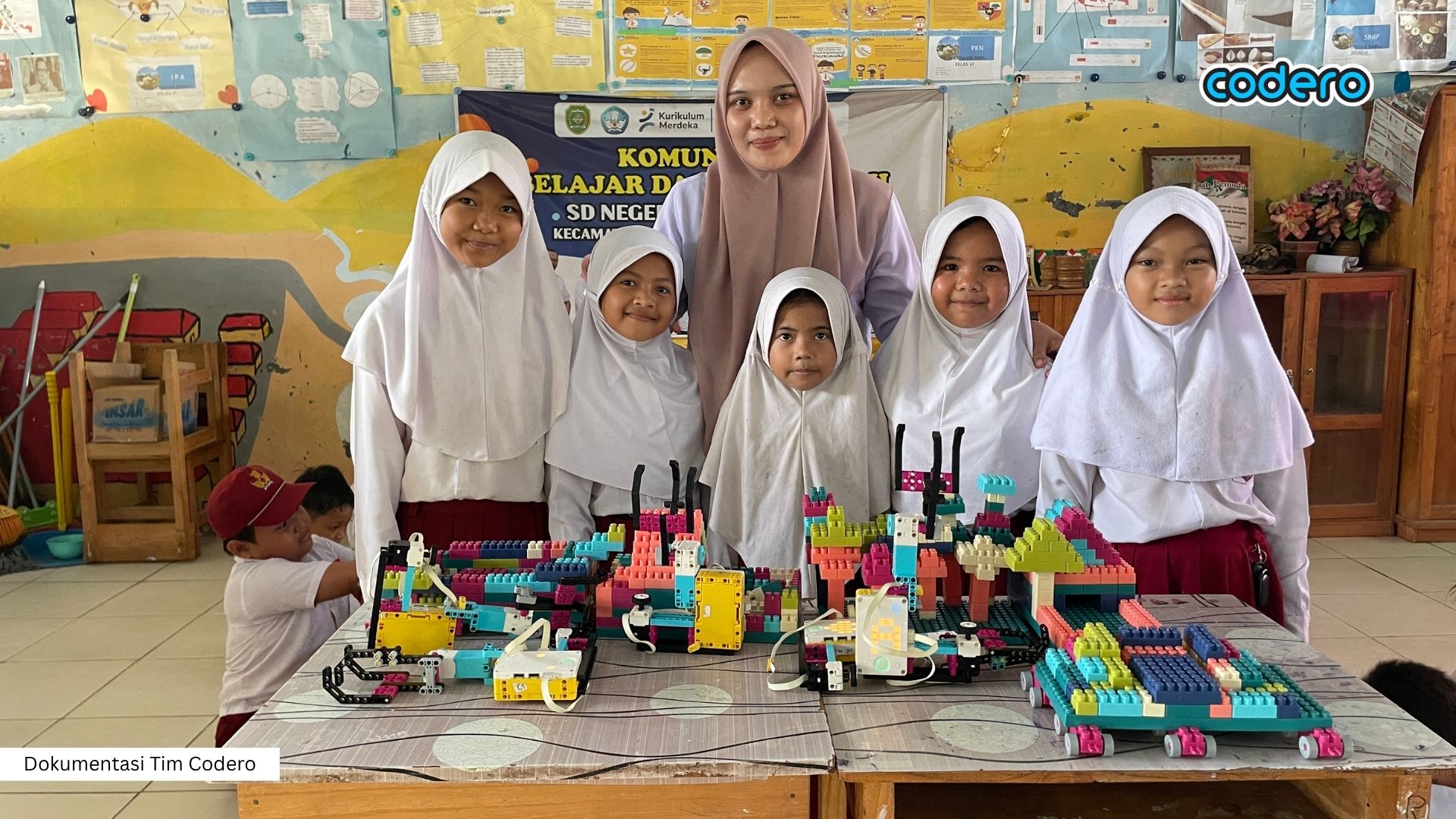
Every step of the way, students will be guided by trained educators ready to provide intensive support. We believe that technology should not be intimidating; it should be a fun, inclusive experience that adapts to each student’s learning pace.
Turning vision into efficient action
We understand that a company’s time and resources are invaluable. That is why Codero has prepared a well-structured and ready-to-execute program. Through this partnership, you can save time and effort without compromising the quality of the impact achieved.
The power of our collaboration doesn’t stop at the classroom. We ensure that every CSR initiative remains sustainable through digital integration on the Codero platform. With a transparent and integrated evaluation and monitoring system, you can track the progress and success of each program in real time and in a systematic manner.
Let’s discuss this further to design a collaborative program that doesn’t just provide a fleeting impact, but becomes a lasting legacy for future generations.
Consult your CSR Collaboration Plan here.
References:
Analisis Efektivitas Program CSR dalam Pemberdayaan Masyarakat di Tengah Era Digitalisasi
Implementasi Program CSR Berbasis Teknologi melalui Program Ekabima oleh PT Cloud Hosting Indonesia
The 4 Types of Corporate Social Responsibility (and Their Benefits)
.jpg)
.jpg)
.jpg)
.jpg)
