
 Indonesia
 English


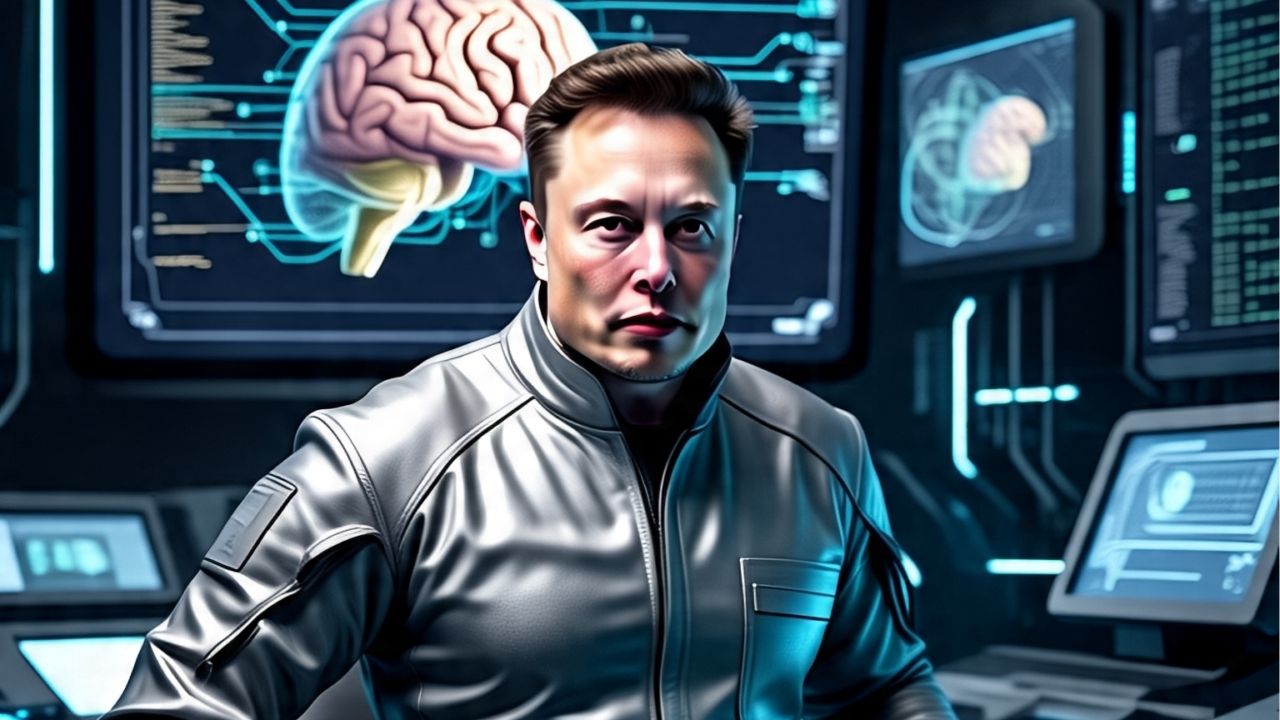
Neuralink is a neurotechnology company founded by Elon Musk in 2016. The company’s goal is to develop Brain-Computer Interface (BCI) technology.
With a concept that sounds like science fiction, Neuralink has the potential to transform the way humans interact with the digital world. Elon Musk aims to create technology that enables direct communication between the human brain and digital devices.
The hope is to help individuals with neurological disorders perform cognitive activities just like anyone else.
How Neuralink Works
Neuralink works by implanting a small chip into the human brain through a surgical procedure using a specialized robot. This chip, called the “Link,” is equipped with ultra-thin electrodes that can read electrical signals from brain neurons and translate them into commands that can be understood by a computer or external device.
Information from the brain is then transmitted to an external device, allowing users to control digital devices—such as wheelchairs or computers—using only their thoughts. This process uses artificial intelligence (AI) to interpret brain signals and translate them into digital commands.
In the long term, this technology is expected to help people with paralysis control computers or even regain lost motor functions.
The Neuralink Patient Journey
In September 2023, Neuralink received approval from the FDA to conduct its first human trials. The study aims to demonstrate that the Neuralink implant is safe and beneficial for everyday life.
One participant interested in the Neuralink project is Noland Arbaugh, a 22-year-old student who suffered an accident that resulted in total paralysis.
In January 2024, Noland agreed to become the first person to receive Neuralink’s brain-implant chip, the N1 Chip. With Neuralink’s help, Noland was able to control a laptop using only his mind.
“Implant connect,” he said.
This was the voice command Noland used to activate the chip in his brain.
Noland was able to move the cursor by moving his hand so that the cursor followed that direction. After consistent practice, Noland succeeded in controlling the cursor on the computer screen using only his mind (imagined movements), without needing to physically move his limbs.
“The first time I moved the cursor just with my mind, it completely changed my perspective. It was crazy. Two weeks after the surgery, I was so excited all day long. That’s when it all felt real to me,” he said, his eyes sparkling.
“I call it telekinesis, because I’m moving something with my mind. But Elon Musk calls it telepathy, because I’m communicating with the computer through my thoughts.”
However, one month after the surgery, some of the electrode threads failed and no longer functioned as they should. The tiny wires connecting the chip to Noland’s brain began to shift position. As a result, 85% of those wires could no longer capture Noland’s brain signals.
When this happened, the Neuralink team decided not to perform a second surgery. Instead, they updated the software so it could continue to read signals from neurons even with a reduced number of active electrodes. As a result, although performance wasn’t perfect, Noland was still able to use this technology to type and control a computer.
Neuralink’s Future Potential
Neuralink holds great potential across various fields, including:
Healthcare
Assisting patients with strokes, spinal cord injuries, and neurodegenerative diseases such as ALS and Parkinson’s.
Communication
Enabling people with speech impairments to communicate using only their thoughts.
Technology integration
Connecting the human brain directly to AI devices, enabling faster and more efficient interaction with digital technology.
Cognitive augmentation
Enhancing human brain capabilities with additional memory or direct access to digital information.
With the rapid advancement of technologies like Neuralink, it is important for the younger generation to understand the basics of AI and programming. Codero offers an educational solution for coding and AI designed for children from preschool through high school.
We offer interactive learning that teaches the basics of programming, AI, and cutting-edge technologies like Neuralink, so that children become not just users of technology but also its creators.
With Codero, children can develop skills relevant to the future, equipping them with the knowledge needed to thrive in the digital age. Join Codero and be part of a generation ready to face the technological revolution!
.jpg)
.jpg)
.jpg)
.jpg)
